
10 Ways to Balance the Stress Hormone That’s Ruining Your Mood

“Hey, how are you!?”
“Oof, I’m swamped. So busy with work.”
“Oh, I know me too, literally just living for the weekend at this point.”
Remind me again why as a culture we’ve decided that stress is something to brag about?
We wear it like a distorted badge of honor – because it proves we’re working hard enough or at least struggling enough to make up for not being further along.
We’ve talked here before about SOME stress being a good thing. But with chronic, long-term stress (the very kind we’re bragging about), our natural “fight or flight” response goes a little overboard.
The stress response is meant to help us escape injury or death in an emergency and then return to normal after we’ve fought or flew. It’s mediated by the main stress hormone, cortisol.
Cortisol is released from your adrenal glands in response to stress. It’s also naturally high in the morning to get you going, and slowly fades during the day so you can sleep.
Ya know what cortisol isn’t meant to do?
Stay at elevated levels for days, months, and even years on end.
Chronic, too-high levels of cortisol are associated with belly fat, poor sleep, brain fog, high blood pressure, high blood sugar, and even lowered immunity.
Not surprisingly, stress and high cortisol levels are also linked with higher rates of depression and anxiety.
Early symptoms of stress and its effect on mood include irritability, sleep disruption and impaired concentration – all familiar symptoms of depression and anxiety.
What’s even more interesting though is the effect that it has on behaviors.
High stress levels disrupt people’s coping strategies.
The self-care practices that you prioritize are most often the first things to go when stress levels increase.
It usually looks something like this:
>>you notice an uptick or long-lasting bout of stress,
>> your mood dips,
>> you don’t feel like exercising anymore and meditation seems like a pain in the ass,
>> your mood worsens,
>> you start to worry about your mood worsening and what you can do about it, anxiety increases,
> you reach for the ice cream and pizza to make yourself feel better,
>>> your mood dips further, into full-blown depression and anxiety.
If we’re not careful, stress can lead to a nasty cycle of habit and mood disruptions. So if any of this sounds familiar, read on below for ways that we can prevent the cycle from happening all together!
Foods and nutrients to lower cortisol
- Let’s start with one of the biggies that increase your cortisol…sugar. I’m not saying you can never have sugar, but making it a treat instead of a multiple-times-a-day indulgence is probably a better route for our health – mentally and physically.
- High doses of caffeine also increase your cortisol levels. If coffee makes you feel anxious and jittery, consider cutting back on the amount of caffeine you ingest. Matcha and green tea are excellent alternatives to that 4th cup of coffee at 3pm.
- Being dehydrated also increases cortisol levels. Make sure you’re drinking enough water every day, especially if you feel thirsty. By the time you feel thirsty your body is already mildly dehydrated. A good rule of thumb is to shoot for at least half your body weight in oz of water per day. So if you weight 145lbs, aim to get in at least 73oz of water per day.
- There’s also an abundance of foods that we can focus on ADDING INTO OUR DIETS to manage stress. A variety of nutrient-dense whole foods doesn't just help reduce cortisol; it helps all aspects of your health. Tea and a bit of dark chocolate (not the sugary milky kind! 70% cacao or darker) are a delicious way to unwind and can help lower stress levels.
- Finally, don’t forget your probiotics and prebiotics! There is so much new research about the gut-mind connection, and how taking care of your friendly gut microbes is key! Make sure you’re eating probiotic-rich fermented foods and getting a healthy dose of prebiotic
Lifestyle techniques to lower cortisol
Food is powerful but it’s not the only way to lower cortisol levels.
- Reduce your stress with mindfulness. Many studies have shown that increasing mindfulness and reducing stressful thoughts and worry reduces cortisol. Mindfulness can be increased through meditation, but also by simply quieting the mind and paying attention to only what’s happening in the present moment.
- Getting adequate exercise and physical activity is a vital part of stress management. However, it’s also important to not overdo it. If you’re feeling particularly run down or suffering from adrenal fatigue and chronic inflammation, consider a less intense and low impact form of exercise as your body heals.
- Get enough sleep! Getting adequate sleep is way too underrated. Sleep reduces cortisol levels and also helps improve your overall health in so many ways.
- Make time for play and adventure. Seriously. Between work, school, kids, hitting the gym, balancing family responsibilities, and meeting friends for happy hour when is the last time that you did something just for play? Fly a drone, swing at the park, color or draw, take up juggling – find an activity you can do purely for pleasure.
- Reach out to your people and actively fight against loneliness. Aside from not feeling very nice, studies are now documenting the many adverse effects of social isolation and loneliness. Maintaining good relationships and spending time with people you like and who support you is key.
Bottomline: Stress is no longer cool to brag about.
We’ve established that too much stress and high levels of cortisol aren’t good for anyone.
Lucky for us, there are MANY different ways to decrease our stress levels and in turn improve our physical, mental and emotional health – not to mention feel a hell of a lot happier.
Let me know your favorite ways to lower cortisol in the comments below!
Recipe (High fiber prebiotic):
De-Stressing Chocolate Pudding
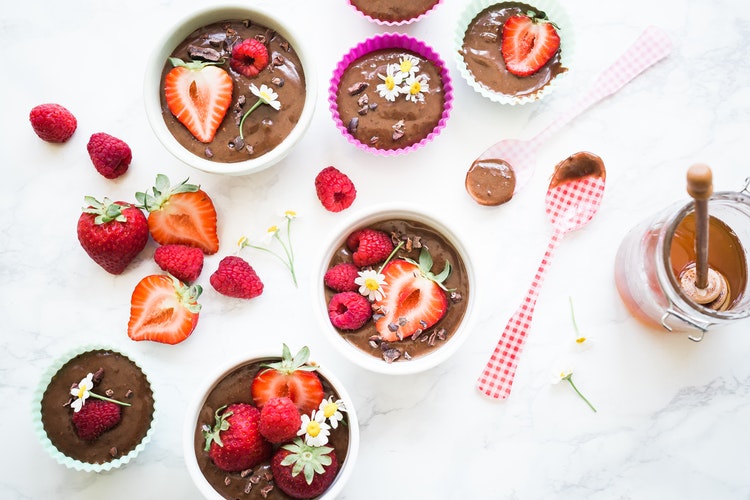
This pudding is so rich and creamy, you’d never guess it’s made from avocados!
Serves 6
3 ripe avocados
¼ cup cacao powder (unsweetened)
¼ cup maple syrup or honey
½ tsp vanilla extract
1 dash salt
Instructions
Place all ingredients into a food processor and blend until smooth. Top with berries of choice or dark chocolate shavings.
Serve & enjoy!
Tip: Try adding a pinch of cinnamon for a deeper flavor.
References:
https://authoritynutrition.com/ways-to-lower-cortisol/
http://www.precisionnutrition.com/all-about-cortisol
https://authoritynutrition.com/16-ways-relieve-stress-anxiety/
https://www.thepaleomom.com/managing-stress/
http://www.health.harvard.edu/staying-healthy/understanding-the-stress-response
https://www.psychologytoday.com/blog/in-practice/201303/why-stress-turns-depression
https://www.webmd.com/depression/features/stress-depression#1
https://adaa.org/understanding-anxiety/related-illnesses/stress#
https://www.healthline.com/health/stress-and-anxiety#symptoms