
Is Stress Actually Hurting You? The Everyday Culprit Messing With Your Health and How to Manage It

So you’re a little stressed, what’s the big deal?
Or maybe you’re realllll effin stressed and you know it’s a big deal, and that stresses you out even more.
Either way, this post is for you. We’re going to dive into why stress IS such a big deal and more importantly, the exact steps to take to manage it.
Let’s start by establishing that WE’RE ALL stressed to some degree.
In fact, a small amount of stress is a perfectly normal and even healthy reaction with real benefits (more on that in a minute).
Physiologically, stress can be defined as the “non-specifc response of the body to any demand for change.”
Stress can also be described as our thoughts and emotions in response to different demands, perceptions, and experiences.
So stress is both a physiological and emotional response in the body.
It’s also helpful to note that we can classify stress by its duration.
Acute stress is something temporary - it arises from situations like a big presentation, a blind date that’s making you all kinds of nervous, or accidentally walking upon a pride of hungry saber tooth tigers.
From an evolutionary perspective - acute stress protects us from danger by putting us into fight or flight mode and allowing us to better survive a situation. Then, when the “threat” (a.k.a. “stressor”) is gone, the reaction subsides, and all is well.
Our stress response evolved specifically for situations like saber tooth tiger encounters as a way to keep us alive.
So short term stress usually doesn’t mess with your health - it is your body’s natural reaction to circumstances and can even be life-saving.
The thing is, most of us have slipped into a state of near constant stress.
Episodic stress can arise from situations that are acute but repeated often such as rushing to work every morning or having your desk next to a colleague you can’t stand
Chronic stress is a result of ongoing, daily stressors that last long term like a job you hate, toxic relationships, chronic health or pain issues, and even regular negative thoughts about your appearance or how you feel you should act in social situations.
And it’s the long term stress that’s the problem.
You see, your body has specific stress reactions. If these stress reactions are triggered every day or many times a day, they can start to have a serious impact on your health.

Still not convinced that long term stress is a problem?
Let's dive into the "stress mess."
Mess #1 - Increased Risk of Heart Disease and Diabetes
Anything that increases the risk for heart disease and diabetes (both serious, chronic conditions) needs to be discussed - no matter how far off they may seem.
Long term stress promotes chronic inflammation and increased blood pressure which can result in damaged arterial walls aka it increases your risk for heart disease. Stress can further increase blood glucose levels and how well your cells responding to insulin, increasing the risk for diabetes.
Mess #2 - Immunity
Did you notice that you get sick more often when you're stressed? Maybe you get colds, cold sores, or even the flu more frequently when you are stressed?
It’s no coincidence.
Stress hormones such as cortisol suppress inflammation during a stress response.
Long term stress can result in the body developing a resistance to cortisol resulting in an increase of inflammation promoting cytokines. Chronic stress also results in lower numbers of signaling proteins vital to immune cells and fewer lymphocytes. All of this translates to fewer cells and systems being available to protect the body from infection and disease.
Mess #3 - Leaky Gut
Stress can also contribute to intestinal permeability, also known as “leaky gut.”
Picture this: Have you ever played "red rover?" It's where a row of children hold hands while one runs at them to try to break through.
Think of those hands as the junctions between cells. When they get loose, they allow things to get in that should be passing right on by.
Cortisol (produced in excess in chronic stress) is a strong player in red rover and can open up tiny holes in the intestinal lining by loosening the grip your digestive cells have to each other. The resulting "leaks" in the lining of the intestines can then allow partially digested food, bacteria or other things to be absorbed into your bloodstream.
Mess #4 - Sleep Disruption
Stress and sleep go hand-in-hand.
It’s often difficult to sleep when you have very important (and stressful) things on your mind. And when you don't get enough sleep, it affects your energy levels, memory, ability to think, metabolism, and mood. There’s further research coming out that a lack of sleep can result in increased blood pressure, heart disease, diabetes, weakened immunity, poor balance and a low sex drive.
So, chronic stress disrupts sleep and too little sleep further exacerbates the effects of chronic stress. It’s a nasty cycle that isn’t helping anybody.
.
Mess #5 - It Feels Crappy
The physical consequences of chronic stress are no joke. But the more immediate and sometimes even more debilitating consequences are the mental and emotional side effects.
Waking up stressed, going through your day stressed, and going to bed at night feeling stressed the fu*k out doesn't feel good.
Chronic stress not surprisingly puts you at a higher risk for depression and anxiety and can have a drastic effect on mood and overall wellbeing.
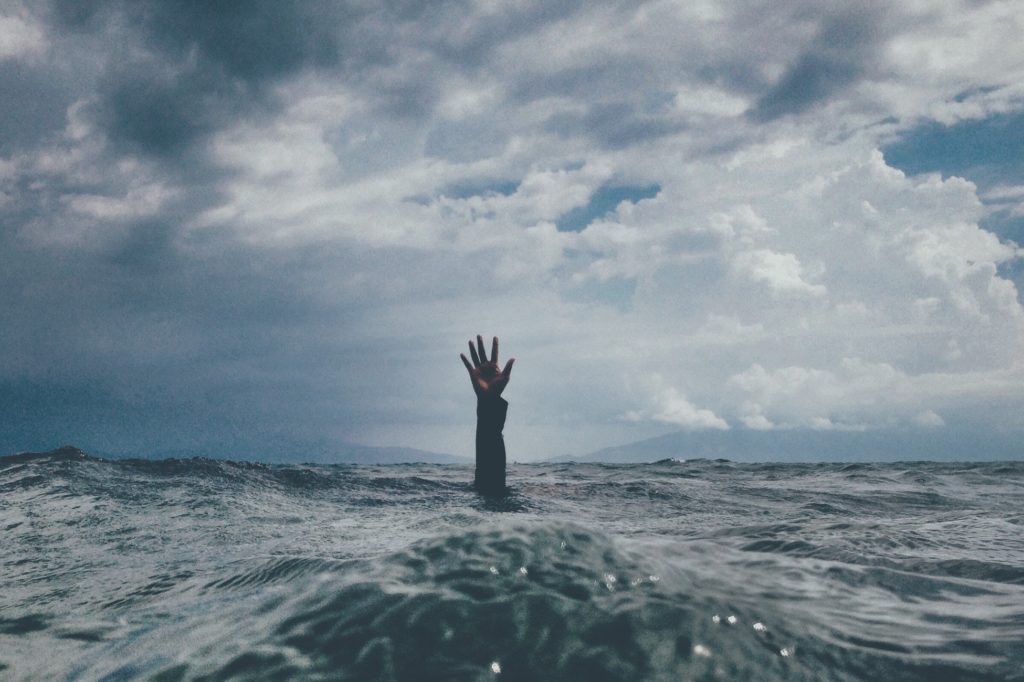
Stress-Busting Tips
We’ve established that stress is no bueno on many levels.
The good news is, there’s a lot we can do to manage it.
Living with chronic stress definitely does NOT have to be the norm. You deserve to wake up feeling calm, relaxed, and happy.
So what do we do?
Start by regaining control of the situation.
More times than not, stress comes from feeling like 1) we don’t have a choice or other option, or 2) we don’t have a say in the matter.
Say for example there’s a coworker who never does shit and it’s stressing you out.
You complain about it to your partner, friends, anyone who will listen. You’re stressed because you do all the extra work to meet your deadlines and the credit is shared.
Managing stress in this situation is sometimes as simple as reminding yourself that you don't HAVE to pick up the slack. You’re choosing to do that for what is probably a very good reason.
You can also CHOOSE to change the situation. Maybe you talk to your coworker and call them out on their shit. Perhaps you voice your concerns to your employer.
The options for how you change the situation are endless but you have to first remember that you DO have a say in how you show up.
As another example, I’ve been dealing with a chronic pain condition for the past 4 years that sometimes gets the best of me.
Feeling like there are 1001 things I’m supposed to be doing to manage my health and there's no way I can do them all is stressful.
When I start to notice that stress building up, it’s important for me to take a step back and remember all that I do have control over.
I have a say in what treatment my doctors and I do and don’t pursue. I can choose to prioritize one thing at a time in a way that feels manageable. I can choose to take a week and not focus on my health because I need a break.
Ultimately, I remind myself that while I can’t control the situation I CAN control how I react to it.
Take back control of the situation.
How can you:
- Ask for help?
- Change the situation to better serve you?
- Put less pressure on yourself? What expectations do you need to let go of?
- Say "no"?
- Focus on what you can control?
- Delegate to someone else?
- Finally make that decision knowing that it won’t be perfect and that’s ok?
Remember that while we can’t always control the circumstances we encounter we CAN control our response to them.
There is also a large body of evidence suggesting that several simple lifestyle habits can have a massive impact on your stress levels.
- Tune back into your breath.
- Deep breathing is a stress busting favorite because it physically slows the body down and simultaneously grounds us back in the present moment. One of my favorite exercises is left nostril breathing.
- Using your right hand, block your right nostril by putting gentle pressure on it with your right thumb. Take in a long, slow, deep breath through the left nostril. Exhale. Repeat 5-10 times.
- Meditation
- Meditation is seriously a wonder pill. Consistent meditation has been associated with increased creativity, mental strength, focus, and memory. It also helps lessen anxiety and depression and increases relaxation and self-esteem.
- Check out the Insight Timer app as great way to get started.
- Nature, yo.
- Whether its adding a few plants to your work or living space, or taking a long walk outside. Greenery and time in nature have an almost magical effect on our stress and wellbeing.
- Being in nature, or even viewing scenes of nature, reduces anger, fear, and stress and increases pleasant feelings. It also reduces blood pressure, heart rate, muscle tension, and the production of stress hormones.
- Unplug
- Technology is unarguably a useful and necessary part of modern life. But heavy technology use has also been linked to increased stress, depression, anxiety and fatigue.
- Take just 1 hour/week to shut off all electronics, light a few candles or step outside and read a book, take a bath, go for a long walk etc and notice the difference.
- Exercise
- We know that exercise is good for our physical health, but getting out and moving your body also results in immediate and long term improvements in mood, depression, stress, anxiety, self esteem, and motivation.
- It doesn't matter what you’re doing so long as you’re moving. Go for a run or walk, play on the monkeybars, take a yoga class, lift it out, or have a dance party in your living room. Move your butt.
Stress is a huge and often underappreciated factor in our health. It impacts our physical and mental health much more than we acknowledge.
It also isn’t something that we HAVE to live with or accept as inevitable.
By shifting your perceptions, intentionally decreasing stressors in your life, and adopting habits that allow you to feel your best, you can ditch that stress mess!
Recipe: Relaxing Chamomile Peach Iced Tea

Peaches are often referred to as the ‘Fruit of Calmness’ in Hungary. When combined with the relaxing powers of chamomile you’ve got an instant stress and anxiety relieving, delicious beverage to sip on!
Serves 1
1 cup steeped chamomile tea, cooled
1 peach, diced
Place both ingredients into a blender and blend until smooth. Add ice if desired.
Serve & enjoy!
Tip: Use fresh or frozen peaches.
Get more support, tips, and #realtalk on managing your mood and mental health in the free, Manage Your Mood private Facebook group!
References:
https://nccih.nih.gov/health/stress
https://www.thepaleomom.com/stress-undermines-health/
https://www.takingcharge.csh.umn.edu/enhance-your-wellbeing/environment/nature-and-us/how-does-nature-impact-our-wellbeing
https://www.huffingtonpost.com/david-volpi-md-pc-facs/technology-depression_b_1723625.html