
Healthy Eating is Making You Sad and Anxious
Can I let you in on a secret?
If you’re depressed and anxious there is not a damn thing wrong with you.
I don’t mean that you’re not experiencing a lot of pain - what you’re going through is real and it sucks big time.
What I do mean is that you are not broken. There is nothing about you that is weak, lesser or needing to be fixed.
Depression and anxiety are your body’s way of telling you that something is out of alignment.
Something in your environment, thoughts, food, network of people, work pace, or other health habits (usually a combination of everything) is out of alignment with your healthiest, happiest self.
The feelings you’re experiencing are a signal that something is off.
It’s your body and brain’s way of screaming at you that something has to change. Something has to give.
These experiences are painful and can feel inescapable - like you’re stuck forever.
BUT the good news is that once you pinpoint what is out of alignment, you can start to make shifts in your environment, thoughts, and habits.
With those shifts come changes in your mood. You start to wake up feeling happy.
It's not easy, but it is simple.
You don’t have to stay feeling stuck, numbed out, crazy anxious, and depressed.
One of the most powerful shifts that can radically affect your mental health is what you’re eating.
While we tend to think of food just the good and bad stuff we put in our bodies, food is the building block of every single cell, hormone, and system in our body.
Food is the most powerful drug on the planet and it’s one that we take multiple times a day.
You have the power to improve gene expression and regulation, reduce inflammation, balance hormones, and optimize our gut microbiome with every single bite.
You are what you eat.
If you’re regularly eating crap, it’s no surprise that you’re going to feel like crap.
For a better understanding of exactly HOW food affects your mood, check out this post.
For now though, let’s assume you’re on board with the fact that what you eat radically impacts how you feel.
What does that mean you’re actually supposed to eat?
Nutrition and diet info is everywhere.
The standard focus (what’ we’ve all grown up with since middle school) is on eating low-fat foods and calorie counting.
While how much you're eating does affect your weight and energy levels it's certainly not the “holy grail” of health and definitely not the best approach for managing your mood.
So let's focus a bit more on the often overlooked (and proven) benefits of what you eat and drink and how you eat and drink it for managing mood, improving energy, and even losing weight.
WHAT you eat and drink
The “calories in, calories out” philosophy (i.e. how much you eat) is being drowned out with research that other factors may be just as if not more important.
Don't get me wrong - limiting calories, carbs or fat can certainly help you lose weight and improve energy, but that's simply not the only factor for long-term for sustained weight loss and improved energy, and it does just about nothing for managing your mood.
You certainly still want to be mindful of how much you’re eating, but a more helpful and sustainable focus is on WHAT you’re eating.
Ideally, you need a varied diet full of minimally-processed foods (i.e. fewer “packaged” “ready-to-eat” foods).
This simple concept is paramount for managing your mood as well as weight loss, energy, and overall health and wellness.
This looks like aiming for the following, every day:
- A colorful array of veggies and fruits at almost every meal and snack. The fiber, antioxidants, vitamins, and minerals allow for optimal physical and mental functioning. PLUS the prebiotics found in fresh produce are the optimal food source for all the good bacteria in your gut that are powerful influencers of your mood.
- Enough protein. Eating enough protein (whether from animal or plant sources) ensures that you’re getting all of the essential amino acids. Essential amino acids are protein building blocks not produced by the body, we have to get them from food and they’re vital for building cells, repairing tissues, and balancing hormones and enzymes. As a bonus: eating protein can increase your metabolism and balance blood sugar aka it helps you feel calmer, more energized, and leaner.
- Healthy fats and oils (never “hydrogenated” ones). There is a reason some fatty acids are called “essential” - you need them as building blocks for your hormones and brain as well as to be able to absorb essential fat-soluble vitamins from your uber-healthy salads. Use extra virgin olive oil and coconut oil, eat your organic egg yolks, and get grass-fed meats when possible. You don't need to overdo it here. Just make sure you're getting some high-quality fats.
HOW you eat and drink
Just as important as WHAT you’re eating is HOW you’re eating and drinking.
Studies are showing that the how has more of an impact than we previously thought.
Are you rushed, not properly chewing your food, and possibly suffering from gastrointestinal issues?
When it comes to how you eat let's first look at “mindful eating”.
Mindful eating means to take smaller bites, eat slowly, chew thoroughly, and savor every bite. Notice and appreciate the smell, taste, and texture. Breathe.
This gives your digestive system the hint to prepare for digestion and to secrete necessary enzymes.
It takes about 20 minutes for your brain to know that your stomach is full. Eating mindfully and slowly allows you to eat just until you’re full which means less feeling bloated and exhausted after your meal.
We also know that more thoroughly chewed food is easier to digest and it makes it easier to absorb all of those essential nutrients.
Mindful eating also gives us the opportunity to take a look at WHY we’re eating.
If you notice yourself reaching for cookies, a bag of chips, or bottle of wine and scarfing it down as fast as possible whenever you’re feeling sad, overwhelmed, or out of control you’re likely emotionally eating.
Add in years of programming around certain foods being bad or prohibited and you’re also more likely to feel deprived and want to binge on the “bad” foods.
Healing your relationship with food - allowing yourself to eat food because it’s food and learning to process through your emotions without the help of food is a vital part of managing your emotions and mood.
The takeaway?
Food is a powerful influencer of your mood. By mindfully and gently shifting what you’re eating as well as exploring the hows and whys you can significantly improve your mental health - less stress, depression, and anxiety and more fun, freedom, and carefree happiness.
Ready to get started? Check out this smoothie and let me know what you think!
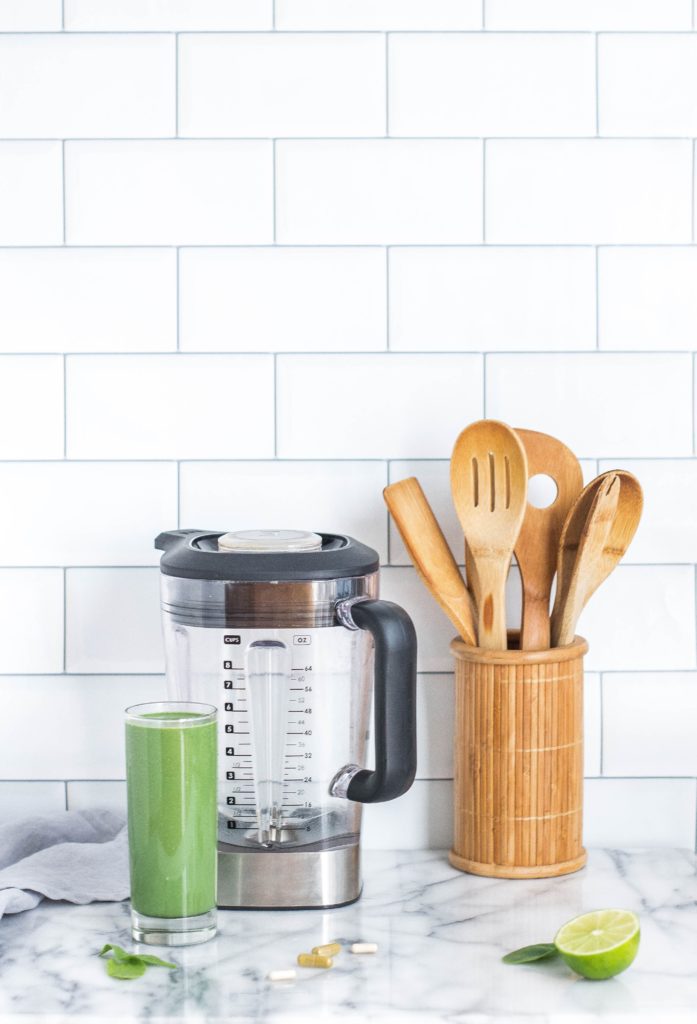
Recipe: Chia Peach Green Smoothie
Serves 1
1 handful spinach
1 tablespoon chia seeds
1 tablespoon ground flax
1/2 banana
1 chopped peach
1 cup unsweetened almond or coconut milk
Add ingredients to blender in order listed (you want your greens on the bottom by the blade so they blend better and have the chia on the bottom to absorb some liquid before you blend).
Wait a couple of minutes for the chia seeds to start soaking up the milk.
Blend, Serve and Enjoy!
Tip: Chia seeds not only have fiber and essential omega-3 fatty acids but they contain all of the essential amino acids from protein!
References:
http://summertomato.com/wisdom-wednesday-salad-dressing-is-your-friend
https://authoritynutrition.com/20-reasons-you-are-not-losing-weight/
http://nutritiondata.self.com/facts/nut-and-seed-products/3061/2
Great article, thanks!