
Can My Symptoms Actually Be a Food Intolerance?

If you’ve dealt with any degree of depression or anxiety you’re familiar with the following symptoms:
You’re always tired
You sleep too little
You sleep too much
Your body hurts all over
You have racing thoughts
Everyone and everything annoys you
You sweat when nervous or notice your heart pounding out of your chest
You can’t focus
You feel foggy and on autopilot
You’re either constipated or having frequent diarrhea
You have frequent headaches
These symptoms are debilitating and make it feel impossible to function let alone get up early, go to work, exercise, cook a healthy dinner, and spend time with family and friends.
Your options?
See a therapist. Talk with your doctor about medication. Try to exercise.
All of these are great approaches to manage your mental health and if they’re working for you, PLEASE continue.
But if they’re not working for you or you KNOW that you deserve to feel better than you currently do, it may be time to look at what you’re eating.
Why is what you’re eating so important to look at?
No matter how many other treatments you stick with - if you have a food intolerance that is causing your symptoms and you continue to put it into your body day after day, you’re going to continue to experience symptoms.
It’s the equivalent of taking an aspirin for your headache but banging your head on the table every few hours and then wondering why the aspirin isn’t making your headache go away.
Food intolerances or sensitivities can affect you in so many ways.
And they’re a lot more common than most people think.
To be clear, I'm not talking about anaphylaxis or immediate allergic reactions that involve an immune response. Those can be serious and life-threatening. These are allergies that require you to steer clear of any traces of in foods and to speak with your doctor or pharmacist about emergency medication, if necessary.
What I'm talking about, is an intolerance, meaning you do not tolerate a specific food very well and it causes immediate or chronic symptoms anywhere in the body.
Symptoms can take hours or even days to show themselves. And symptoms can be located just about anywhere in the body.
This is what makes them so tricky to identify.
Symptoms of food intolerances
There are some common food intolerances that have immediate and terribly painful gastrointestinal symptoms, such as lactose intolerance or celiac disease. These can cause stomach pain, gas, bloating, and/or diarrhea; symptoms can start immediately after eating lactose or gluten.
On the other hand, other more insidious symptoms may not be linked to foods in an obvious way.
Symptoms like:
- Chronic muscle or joint pain
- Sweating, or increased heart rate or blood pressure
- Headaches or migraines
- Mood swings
- Exhaustion after a good night's sleep
- Bloating, gas, constipation, or diarrhea
- Rashes or eczema
- Inability to concentrate or feeling like your brain is "foggy"
- Shortness of breath
If your body has trouble digesting specific foods, it can affect your hormones, metabolism, and even cause inflammation and result in any of the symptoms listed above. And these can affect any (or all) parts of the body, not just your gastrointestinal system.
How to prevent these intolerances
The main thing you can do is to figure out which foods or drinks you may be reacting to and stop ingesting them.
I know, I know...this sounds so simple, and yet it can be SO HARD.
The best way to identify your food/drink triggers is to eliminate them.
Yup, get rid of those offending foods/drinks. All traces of them, for three to four full weeks and monitor your symptoms.
If things get better, then you need to decide whether it's worth it to stop ingesting them, or if you want to slowly introduce them back one at a time while still looking out to see if/when symptoms return.
Start Here: Two common food intolerances
Here are two of the most common triggers of food intolerances:
- Lactose (found in dairy) - eliminate altogether, or look for a "lactose-free" label - try nut or coconut milk instead.
- Gluten (in wheat, rye, and other common grains) - look for a "gluten-free" label - try gluten-free grains like rice, quinoa & gluten-free oats. *Just because a cookie or pastry is labeled gluten-free doesn’t make it ‘healthy’ and you should eat any more of it than you would regularly.
If you can eliminate all traces of lactose and gluten for three to four weeks, it can confirm whether either or both of these, are a source of your symptoms.
Yes, dairy and grains are a part of many government-recommended food guidelines, but you absolutely can get all of the nutrients you need if you focus on replacing them with nutrient-dense foods.
A reliable way to monitor how you feel after eating certain foods is to track it. After every meal or snack, write down the foods you ate, and any symptoms so you can more easily spot trends.
And, as mentioned earlier, symptoms may not start immediately following a meal. You may find, for example, that you wake up with a headache the morning after eating bananas.
You might be surprised what links you can find if you track your food and symptoms well!
IMPORTANT NOTE: When you eliminate something, you need to make sure it's not hiding in other foods, or the whole point of eliminating it for a few weeks is lost. Restaurant food, packaged foods, and sauces or dressings are notorious for adding ingredients that you'd never think are there. You know that sugar hides in almost everything, but did you also know that wheat is often added to processed meats and soy sauce, and lactose can even be found in some medications or supplements?
When in doubt you HAVE to ask the server in a restaurant about hidden ingredients, read labels, and consider cooking from scratch.
What if it doesn’t work?
If eliminating these two common food intolerances doesn’t work, you can consider eliminating other common trigger foods (sugar, dairy, all grains for 3-4 weeks) to see if you notice a difference in symptoms.
You may need to see a qualified healthcare practitioner for help, and that's OK. Don't continue suffering if you don't need to!
Have you noticed a link between what you’re eating and your mood symptoms? Let me know in the comments!
Ready to take the plunge? Here’s a recipe for quick and easy homemade dairy-free milk to get you started!
Recipe: Homemade Nut/Seed Milk
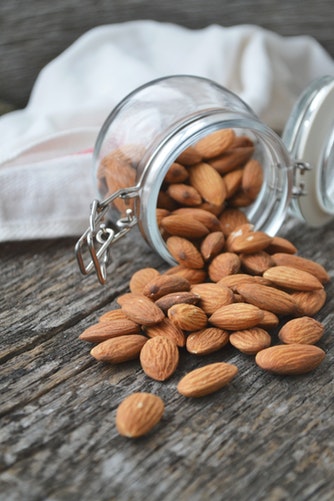
Makes 3 cups
½ cup raw nuts/seeds (almonds, walnuts, pecans, pumpkin seeds, or sesame seeds)
2 cups water
¼ teaspoon vanilla extract (optional)
- Soak nuts/seeds for about 8 hours (optional, but recommended).
- Dump soaking water & rinse nuts/seeds.
- Add soaked nuts/seeds and 2 cups water to a high-speed blender and blend on high for about one minute until very smooth.
- Strain through a small mesh sieve with 2 layers of cheesecloth. Squeeze if necessary.
Serve & enjoy!
Tip: Double the recipe and store the milk in an airtight container in the fridge for up to 7 days.
References:
http://www.dietvsdisease.org/11-warning-signs-you-have-a-food-intolerance/
https://authoritynutrition.com/lactose-intolerance-101/
https://authoritynutrition.com/signs-you-are-gluten-intolerant/
http://www.precisionnutrition.com/food-sensitivities-health-infographic